
Capabilities
Every service, grouped into systems.
Work is organised into systems rather than a list of trades, because that is how a restoration job is actually bought and built. Use the index to jump to a system.
Capabilities
Work is organised into systems rather than a list of trades, because that is how a restoration job is actually bought and built. Use the index to jump to a system.
A parking deck is the hardest working concrete a building owns. It carries traffic, road salt, standing water and thermal movement at once, and chlorides work down through the slab to attack the reinforcement inside it. Left alone that stops being a maintenance item and becomes a structural one. We take the whole system, because a garage that is repaired but not coated is a garage that will be repaired again: the concrete, the joints, the membrane and the wearing surface are one job, sequenced bay by bay so the structure keeps operating throughout. Large parking garage restoration is programmed the same way, level by level, so a structure of any size keeps earning while it is put right.
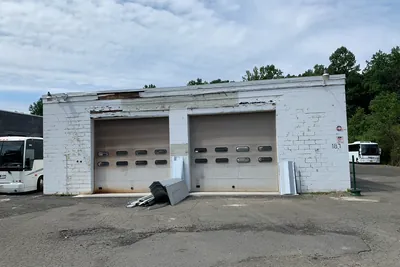
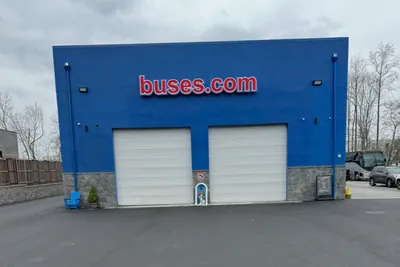
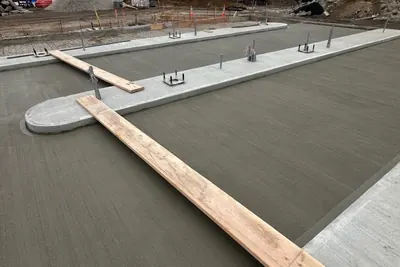
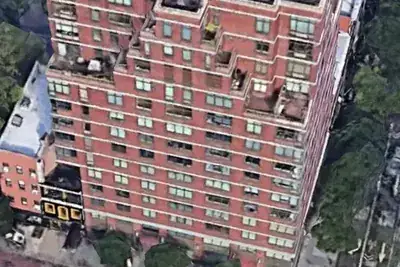
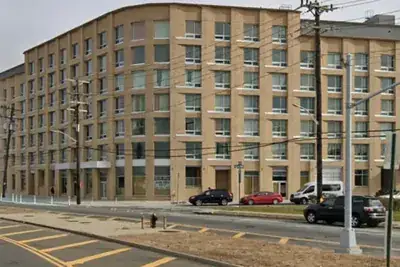
Local Law 11, the Facade Inspection & Safety Program (FISP), puts every New York City building taller than six stories on a five-year facade inspection cycle, examined by a Qualified Exterior Wall Inspector and filed with the DOB as Safe, SWARMP or Unsafe. An Unsafe finding starts a clock: protection goes up immediately and repairs follow on a deadline. A SWARMP condition must be corrected before the next cycle closes, or it becomes the next report's problem, with monthly penalties and a mandatory sidewalk shed waiting behind a missed filing. We carry the whole sequence as one company: the access and probes the engineer needs for the survey, our own scaffold, hoisting and sidewalk bridging, the masonry, stone, lintel and sealant repairs the report calls for, and the paperwork that clears the violation the filing generated. Because the access and the repair are the same crews, the scaffold goes up when the work is ready and comes down the day the condition is corrected, not a season later.
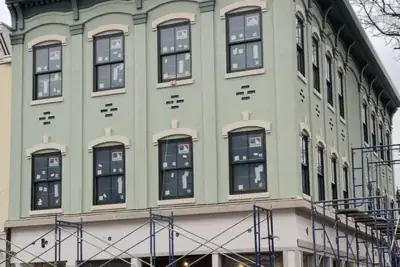
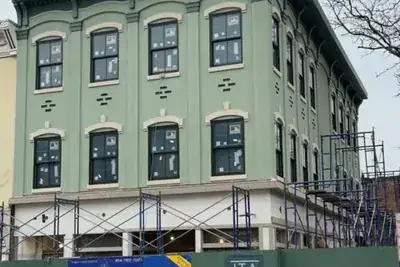
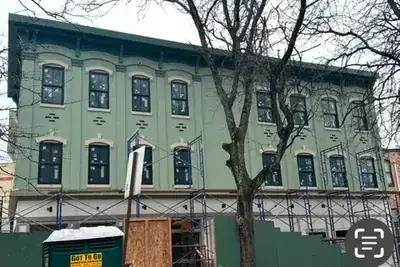
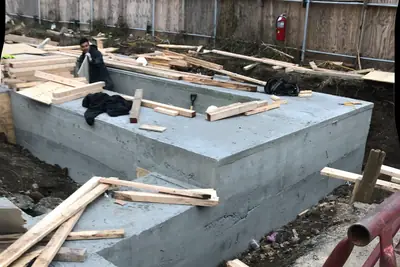
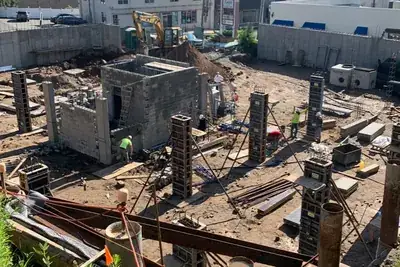
Concrete repair is an engineering problem before it is a materials problem. What matters is why the section failed, what has to be shored while it is out, how the reinforcement is made continuous again, and whether the repair material matches the parent concrete closely enough in strength, modulus and shrinkage to stay bonded. We self-perform the forming, the placement and the finish, so the assessment, the repair and the concrete are one responsibility rather than three subcontractors arguing about which of them caused the crack.
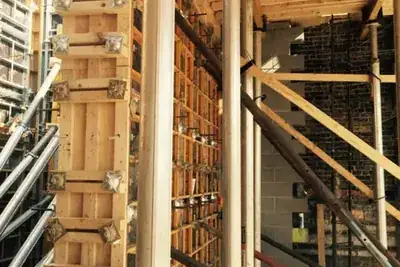
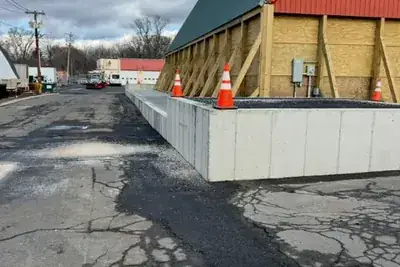
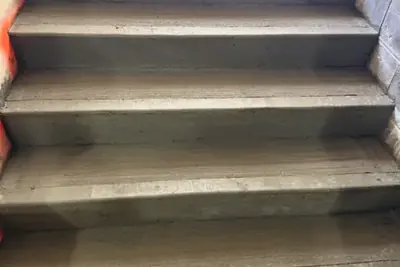
Water is what turns a maintenance item into a structural one, and it very rarely enters a building at the point where the stain appears inside. That is why chasing the symptom wastes money. We work the roof, the parapet, the wall below it and the structure below grade together, and we detail the transitions between them, because transitions are where assemblies actually fail. The membrane and its terminations go in as the structure goes back together, which is the only point at which they can be done properly.
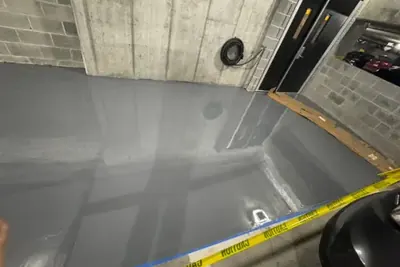
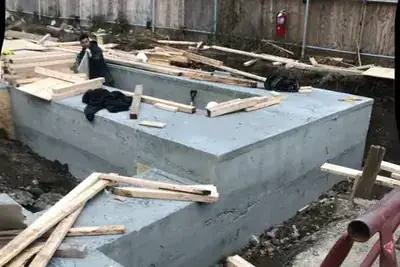
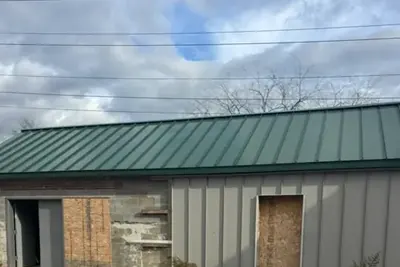
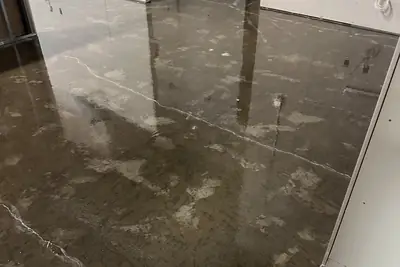
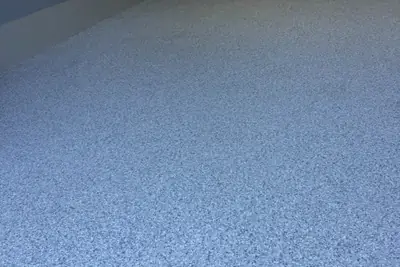
A resinous floor is only ever as good as the slab beneath it and the preparation in between. Most floor failures are bond failures, and bond is decided before any resin is opened: moisture in the slab, laitance left on the surface, contamination in an old joint. Because the concrete is our own work as well, the substrate and the coating are the same responsibility, which removes the usual argument about why a floor lifted. Epoxy systems and urethane systems are both self-performed, and the choice between them is made on what the floor has to survive rather than on what is easiest to install.
Renovation in an occupied building is a logistics problem as much as a construction one. The work is staged around tenants, deliveries and business hours, and the noisy, dusty and disruptive operations are programmed rather than simply started. Because the envelope and structural capability sit in the same company, the structural repair that turns up once a ceiling is open does not stop the job while another contractor is found.
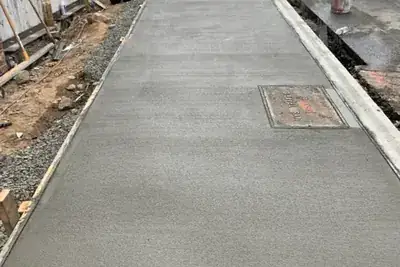
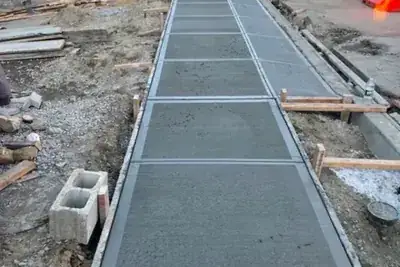
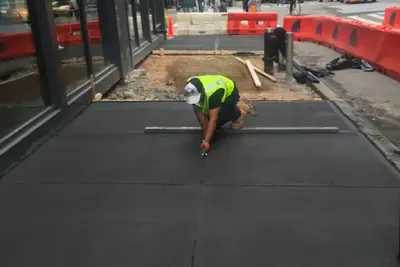
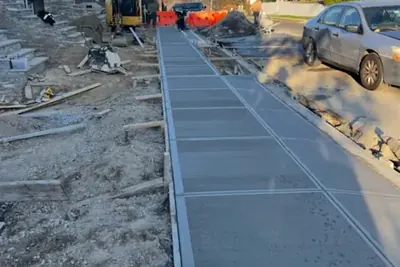
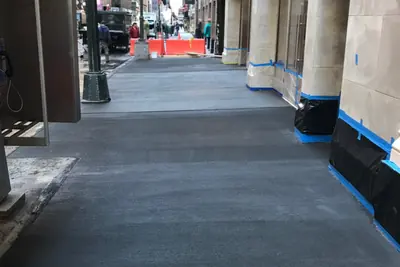
Sidewalk work is public work. It happens in a live street, with pedestrians routed around it, a DOT specification to meet and an inspector who will measure it. We are a DOT approved contractor and we self-perform the concrete, so the forming, the pour and the finish are all in the same hands, and the violation is carried through to dismissal once the bay is signed off.
Design and construction usually sit in different companies, and the gap between them is where cost and delay live. Keeping engineering and architectural coordination in house means the people describing the repair are the people who will build it, and a question raised on site gets answered the same day rather than in the next round of correspondence. Filings and permits are moved by people who deal with those counters regularly.
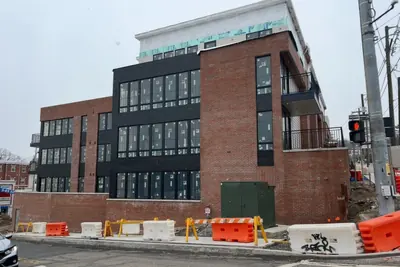
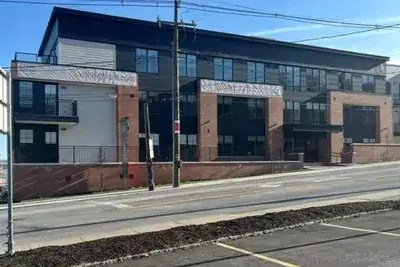
On a New York facade job the public walks underneath the work from the moment the shed goes up. Safety here is not a folder in the trailer: it is the shed that is in the right place, the netting that is actually tied off, the scaffold rigged to the engineered layout, and someone on site whose job is to stop work when something is wrong. We plan it with the scope rather than after it.
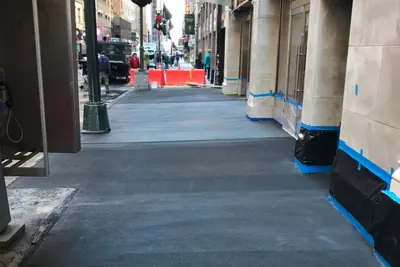
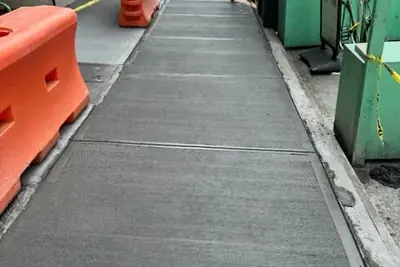
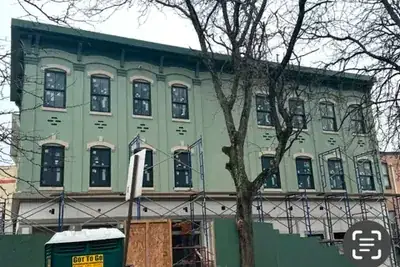
Most firms do one half of this. Either they file the paperwork and subcontract the repair, or they do the repair and hand back the correspondence. We do both, which matters when a violation needs a permit pulled, work carried out and an inspection passed in that order. DOB and DOT run as separate tracks because they are separate agencies with separate processes and separate inspectors, and a violation is not closed until the condition is corrected at the building and the record is cleared on paper.
Emergency work is a staffing question before it is a construction question. Because the crews, the access equipment and the concrete capability are all in house, mobilising does not depend on another company picking up the phone. The people who make the building safe tonight are the people who build the permanent repair afterwards, and who clear the violation that follows it.
Describe the condition and we will tell you which trade it is, and whether it is urgent.